January 13, 2024
Reading for Social-Emotional Development
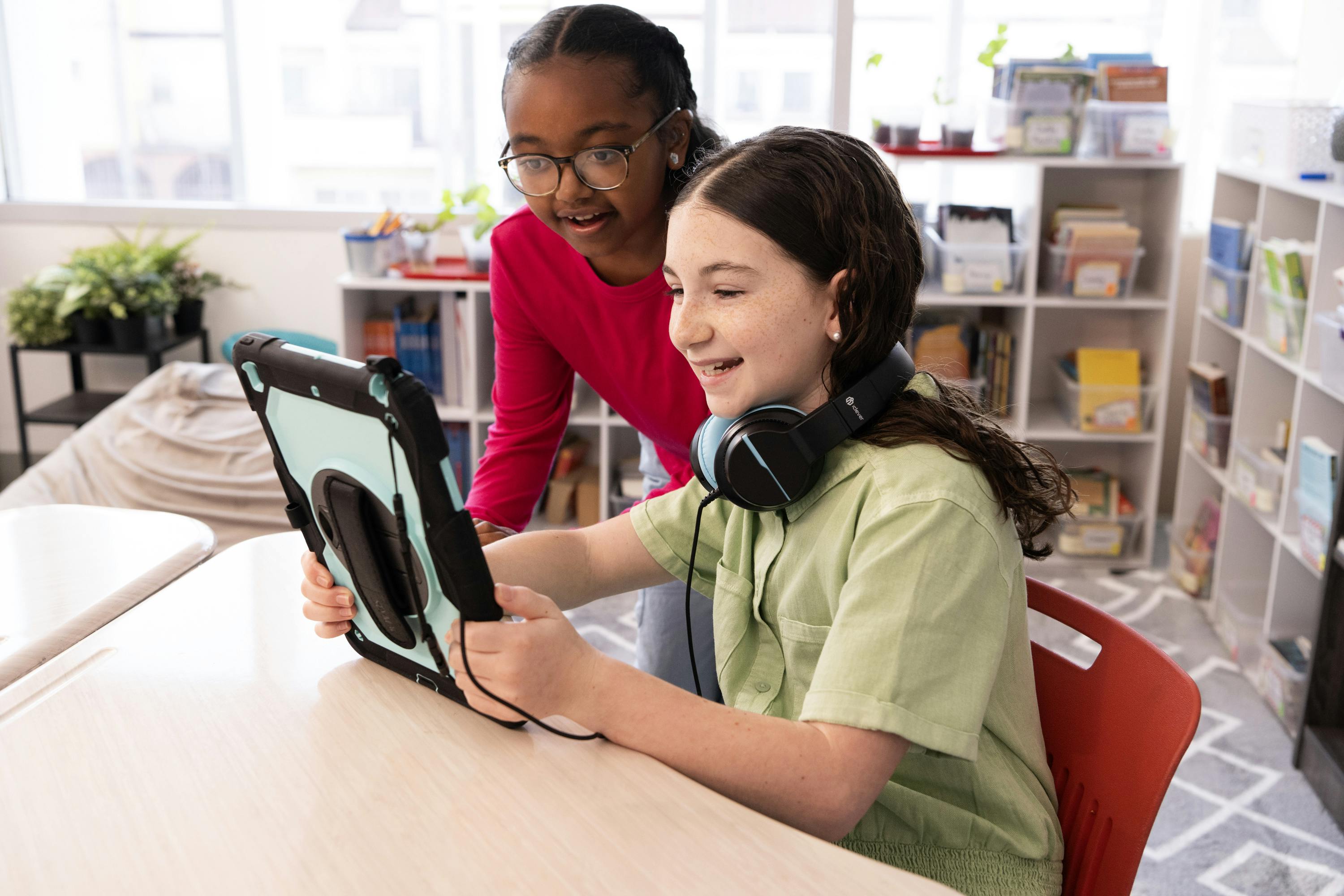
Social Emotional Learning (SEL) is a recent educational trend that has risen to popularity very quickly. However, unlike other trends in education, SEL is well supported by research and “yields positive outcomes for students, adults, and school communities” (What Does the Research Say? - CASEL). SEL is shown to improve academic achievement, increase well being and safety in schools, promote future readiness, be an effective investment, and be impactful across cultural contexts. SEL creates collaborative, supportive, safe learning spaces where all students feel loved, supported, and seen. When SEL is done well, students and teachers work together to learn and build strong personal relationships and community. In short, SEL helps teachers teach better and learners learn better. This value cannot be overstated (The Truth About SEL? It Works | NEA).
SEL instruction can look many different ways. Done well and with intention, it hugely benefits students and school communities. Some schools and districts adopt SEL curricula, while others leave it to teachers to teach independent units or lessons. Still others conduct small, frequent activities to nurture SEL skills. One of the primary vehicles for conveying important messages about diversity, empathy, kindness, and community is literature. Whether books are explicitly about SEL themes or simply have characters that are representative of these themes, they can help children access abstract social and emotional ideas easily.
Researchers at the New School in New York City have discovered evidence that reading literary fiction can help develop empathy and compassion. By putting oneself in another’s shoes through the act of reading literary fiction, students can learn to better understand what others are thinking and feeling. The act of empathizing with characters in a book allows children to practice these skills and apply them to their real world relationships.
Interestingly, there is a difference between reading genre or popular fiction (fast-paced, plot driven, commercial fiction) and literary fiction (slower-paced fiction with an emphasis on the human condition, complex and developed characters, and less of a concern for plot). Reading genre fiction doesn’t offer the same benefits. Genre fiction tends to be formulaic and predictable, offering children a chance to practice making inferences and tracking story arcs. Literary fiction, on the other hand, focuses more on internal motivations and relationships. This requires readers to imagine what someone must be thinking or feeling to fill in any gaps. In doing so, students can develop a better understanding of how others think (Kidd and Castano, Reading Literary Fiction Improves Theory of Mind, Science, October 18, 2013, Vol. 342, Issue 6156, pp 377-380). This distinction helps support the importance of reading of all kinds, as the reading of these two genres supports different areas of development.
In addition to understanding the perspective of others through literature, students can also understand their own identities and backgrounds. Literature can serve as a window, by which to view other perspectives. It can also be a mirror, in which children can see themselves and their own lives reflected. Finally, it can be a sliding glass door, as readers are transported into the world of the story and feel empathy for the characters (Mirrors, Windows, and Sliding Glass Doors: A Metaphor for Reading and Life | Great Schools Partnership). Regardless of race, ethnicity, gender identity, sexuality, SES, or religious background, it is crucial that all children see themselves reflected in the literature they are exposed to in school. When children feel represented in what they read, they are more active, motivated learners. SEL is the first step towards a motivated, inspired community of readers and learners.
For more information about SEL, we highly recommend perusing the following resources:
- CASEL
- Ribas, W.B., Brady, D., & Hardin, J. M. (2022). Social Emotional Learning in the classroom: Practical guide for integrating all SEL skills into instruction and classroom management. Norwood: Ribas Publications
- Social & Emotional Learning (SEL) | Edutopia
- Resources on Social Emotional Learning (SEL) and Student and Educator Mental Health | NEA
- SEL in Digital Life Resource Center | Common Sense Education