April 29, 2026
Reading in Motion: Combining Physical Activity and Literacy
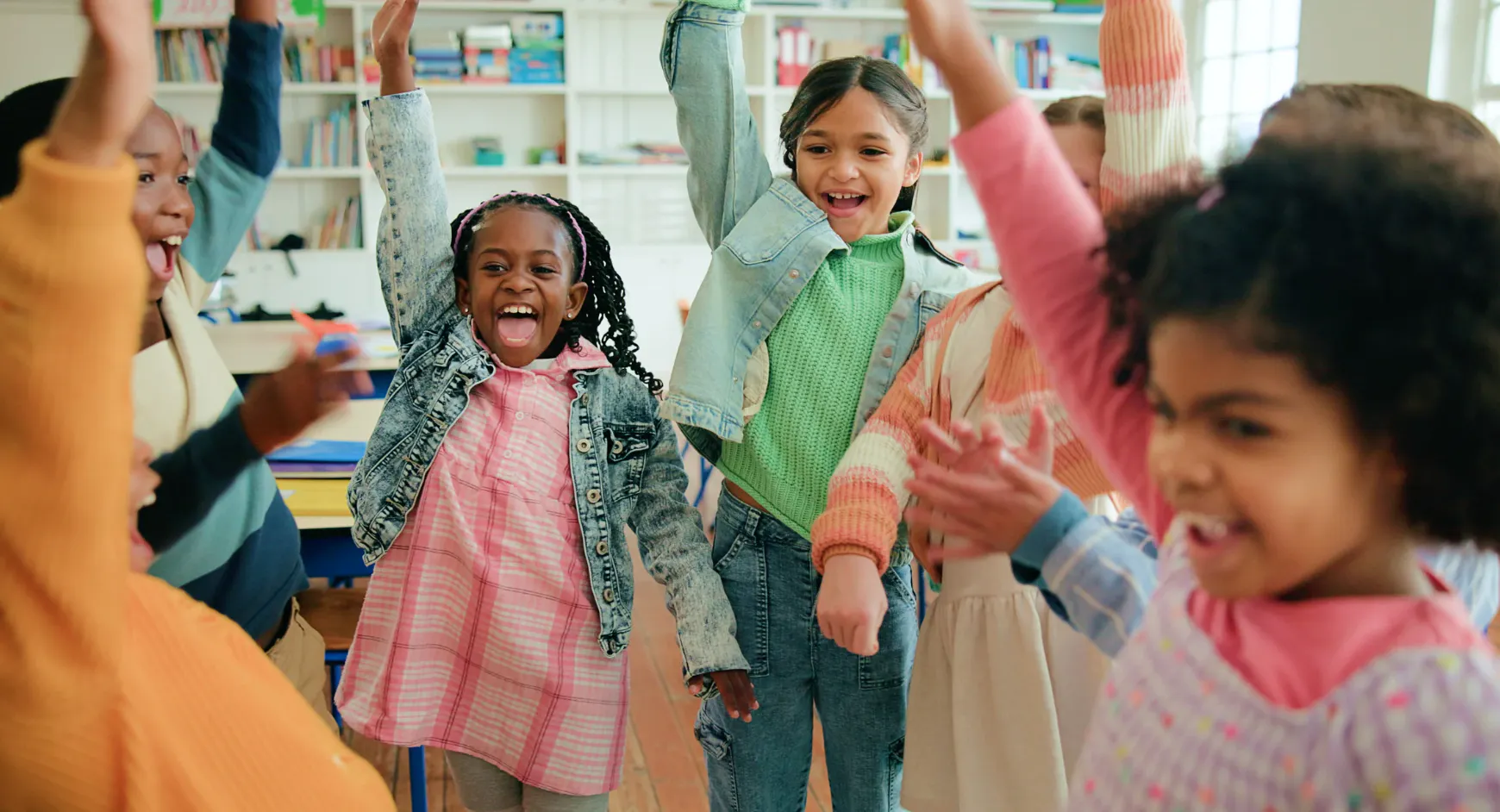
What if the key to deeper reading engagement isn’t asking kids to sit still, but inviting them to move?
Done intentionally, physical activity can enhance learning outcomes for students. Integrating movement into academic lessons can improve cognitive development, increase time on task, and even boost academic performance in areas like reading (Committee on Physical Activity and Physical Education in the School Environment). When kids move, blood flow increases, attention sharpens, and the brain becomes more receptive to learning. Even small bursts of movement can improve focus, memory, and executive functioning skills that support literacy development (Stanford University).
Movement also helps make abstract literacy skills more concrete. When students act out sounds, syllables, or story events, they’re engaging multiple pathways in the brain, which strengthens comprehension and retention. Classrooms that integrate movement into reading instruction often see higher engagement, especially among students who struggle to sit still or stay focused. Reading doesn’t have to be sedentary to be effective. In fact, pairing literacy with physical activity can make reading more joyful, memorable, and accessible for all learners (Edutopia).
Creative Ways to Combine Movement and Reading
- Turn stories into mini-performances. Encourage students to act out characters, settings, or key events.
- Take an audio book on a walk with your young reader and pause to discuss the story while you move.
- Pair phonemes or syllables with movements like jumping, clapping, or stretching.
- Hide words or sentences around a space and have kids move to find and read them.
- Assign movements to represent story elements (like spinning for setting changes or stomping for conflict).
- Use apps like Rally Reader or activities that encourage kids to read aloud, respond, and physically engage with text.
Blending movement with reading doesn’t require extra time or planning, just small shifts in approach. When literacy becomes active, it helps students be who they are: curious, energetic, and eager to engage with the world around them.